Free Weekly Meal Planner
Fill in a free seven-day meal planner for breakfast, lunch, and dinner, add your grocery notes, then print your week. No account needed.
Load an editable dinner example · See the seven-day dinner plan and quantities
Skip the blank page
Try seven dinners for about four servings each. Breakfast and lunch stay yours to fill in. Review the quantities and meal details below; adapt ingredients for your household.
Your entries save automatically in this browser when storage is available. Clear Planner removes the saved entries. The matching grocery list is for the original example; changes to meal names do not recalculate ingredients.
Grocery List
Add anything you need for the week.
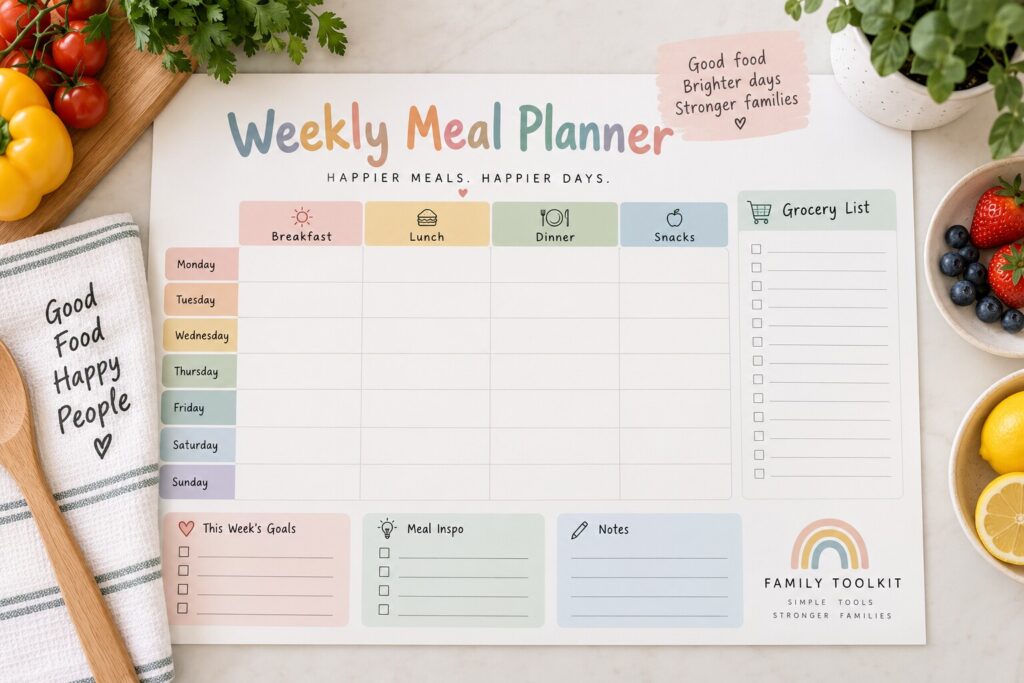
Weekly Meal Planner for Simple Family Meal Planning
Planning meals for the week can make busy family life feel much more manageable. A weekly meal planner gives you one place to organize breakfast, lunch, and dinner for each day of the week. Instead of wondering what to make at the end of a long day, you can look at your plan and know what is already on the menu.
Use the free planner above to map out your family’s meals for the week. You can plan around your family’s schedule, favorite foods, leftovers, activities, and nights when you simply need an easy dinner.
How to Use This Weekly Meal Planner
New to meal planning? Start with meals your family already enjoys. Repeating breakfasts and lunches makes your first week easier.
- Set your week. Add the date in “Week of,” then check your calendar for evenings when you’ll need something quick.
- Choose your dinners. Fill in each day’s Dinner box. Mix family favorites with easy options, and choose ingredients you can use in more than one meal.
- Add breakfast and lunch. Keep these simple. If you’re planning leftovers for lunch, cook extra portions the night before.
- Build your grocery list. Check your fridge, freezer, and pantry, then enter missing ingredients in the Grocery List area. Add quantities for your household and select Print when you’re ready.
A Simple Seven-Day Dinner Plan for Four
Start with dinners if planning every meal feels overwhelming. This example makes about four servings per dinner; adjust for your family’s appetites. The matching grocery list covers these seven dinners only. Add breakfasts, lunches, snacks, and drinks separately.
- Monday — Sheet-pan chicken: Roast 1½ lb boneless chicken, 2 lb potatoes, and 1 lb carrots with oil and your usual seasonings.
- Tuesday — Bean and corn rice bowls: Cook 1 cup dry rice; serve with two drained 15-oz cans of beans and 12 oz frozen corn.
- Wednesday — Spinach pasta: Cook 1 lb dry pasta and combine with 24 oz tomato pasta sauce and 10 oz frozen spinach, cooked and drained.
- Thursday — Bean quesadillas: Fill 8 medium tortillas with two drained 15-oz cans of beans and 8 oz cheese. Serve with 3 sautéed bell peppers.
- Friday — Pita pizzas: Top 4 large pitas with 8 oz pasta sauce, 8 oz cheese, and 2 sliced bell peppers, then bake until hot.
- Saturday — Loaded baked potatoes: Bake 4 medium potatoes, about 2 lb total; top with two heated, drained 15-oz cans of beans and 4 oz cheese.
- Sunday — Spinach eggs and toast: Scramble 8 eggs with 10 oz cooked, drained frozen spinach; serve with 8 slices of toast.
Matching Grocery List: Seven Dinners
- Produce: 4 lb potatoes, 1 lb carrots, 5 bell peppers.
- Protein and dairy: 1½ lb boneless chicken, 8 eggs, 20 oz shredded cheese.
- Bread and grains: 1 cup dry rice, 1 lb dry pasta, 8 medium tortillas, 4 large pitas, 8 slices of bread.
- Pantry: Six 15-oz cans of beans and 32 oz tomato pasta sauce.
- Freezer: 20 oz spinach and 12 oz corn.
- Check before shopping: Cooking oil and seasonings. Buy any missing items and include their full package cost in your shopping total.
These are amounts used, not always package sizes sold. For example, two 24-oz sauce jars leave 16 oz for another meal. Compare package sizes and storage options before choosing the best value. Cheese is shared across three dinners, beans across three, and spinach across two, so fewer one-use ingredients are left behind.
Set a Budget Using Your Store’s Prices
No fixed dollar total is promised: prices vary by location, store, package size, and dietary substitutions. Cross off ingredients already on hand, price the full packages you need, then add the separate cost of breakfasts, lunches, snacks, and drinks. A dinner-only list is not a full weekly food budget.
For swaps and more affordable staples, see our cheap family grocery list. Copy the dinners into the planner above and transfer the quantities you need into the Grocery List Generator. If you already have food but no plan, start with Full Fridge, Nothing for Dinner.
Benefits of Planning Meals for the Week
A little planning can save time and reduce the number of decisions you have to make during the week. When you already know what you’re making for dinner, you’re less likely to rely on last-minute takeout or an expensive grocery trip.
Meal planning can also make grocery shopping more organized. Instead of buying random ingredients and figuring out how to use them later, you can shop based on the meals you’ve already chosen.
If your refrigerator often feels full but dinners still do not come together, use our guide to shopping for five meals that connect. It shows how to give perishable ingredients more than one job without serving the same meal all week.
A weekly plan can also help reduce food waste. Look for opportunities to use the same ingredients in multiple meals. For example, leftover roasted chicken can become lunch the next day, while extra vegetables can be added to another dinner.
Most importantly, your meal plan doesn’t need to be perfect. The goal is to make your week easier, not to create another task that has to be done perfectly.
What to Include in Your Weekly Meal Plan
A useful meal plan should fit your family’s actual routine. Consider planning more convenient meals on nights when everyone is busy and saving recipes that require more preparation for days when you have extra time.
You can include:
- Breakfasts for the week
- School or work lunches
- Family dinners
- Snacks
- Leftovers
- Quick and easy meals
- Family favorites
- Meals using ingredients you already have
If your children have different preferences, you can also plan simple sides or substitutions rather than preparing completely separate meals.
Make Grocery Shopping Easier
Once your meals are planned, turn your meal ideas into a shopping list. Grouping the ingredients you need can make your grocery trip faster and help you avoid forgetting important items.
Use the Family Toolkit Grocery List Generator to organize your shopping list after you finish planning your meals.
You can also use the Family Budget Calculator to keep an eye on your overall family spending and make grocery costs part of your weekly budget.
For general guidance on building balanced meals, you can also explore the USDA MyPlate resources for information about food groups and healthy eating patterns.
Make Your Meal Plan Work for Your Family
The best meal plan is one that you will actually use. Don’t feel like you need seven elaborate dinners every week. A realistic plan might include a few family favorites, one or two easy meals, leftovers, and a night when you don’t cook.
As your family’s schedule changes, your meal planning routine can change with it. Use this free weekly meal planner to create a simple plan that works for your household and makes the week ahead feel a little more organized.