Your child’s first day of daycare comes with a surprisingly long packing list. Between bottles, diapers, extra clothes, nap supplies, paperwork, and comfort items, it is easy to forget something important—especially during a rushed morning.
This first day of daycare checklist separates the essentials from the optional items and explains what to pack for babies and toddlers. Every childcare program has different rules, so use this guide as a starting point, then customize the free School & Daycare Packing Checklist for your center and child.
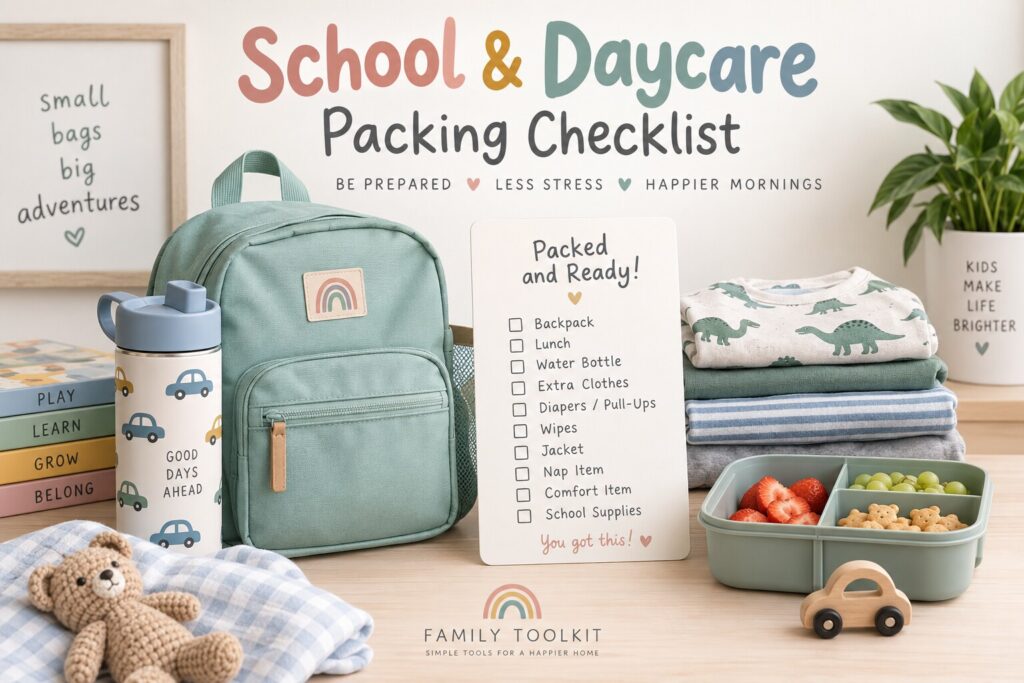
Quick First Day of Daycare Checklist
If you need the short version, start with these categories:
- Completed enrollment and emergency-contact forms
- Diapers or pull-ups, wipes, and approved diaper cream
- Two or three complete changes of clothes
- Bottles, breast milk, formula, meals, or snacks if required
- Labeled cup or water bottle for older children
- Bibs, burp cloths, and feeding utensils if needed
- Crib sheet, blanket, sleep sack, or nap mat if permitted
- Pacifier or approved comfort item
- Weather-appropriate outdoor clothing
- Any center-requested medication forms or care instructions
- A labeled bag for wet or dirty clothing
Before buying or packing anything, ask the daycare what it provides. Some centers supply diapers, wipes, meals, crib sheets, and sunscreen. Others ask families to bring nearly everything.
What to Confirm With Your Daycare First
A quick policy check can prevent overpacking and last-minute surprises. Ask these questions before the first day:
- Which supplies does the center provide?
- How many diapers, bottles, outfits, and snacks should families send?
- Can supplies stay at daycare, or must they travel home each day?
- How should bottles, food containers, clothing, and personal items be labeled?
- What nap items are allowed in your child’s classroom?
- Does the center allow pacifiers or comfort items?
- What forms are required for diaper cream, sunscreen, or medication?
- Are there allergy, food, container, or lunchbox restrictions?
The ChildCare.gov childcare checklist also includes health, safety, supervision, and communication questions parents can review with a provider.
First Day of Daycare Checklist for Babies
Infants usually need the most supplies because feeding, diapering, and clothing changes happen throughout the day. Your center should give you exact quantities, but this list will help you prepare.
Feeding supplies
- Prepared and labeled bottles
- Breast milk or formula in the format your daycare requires
- Extra bottle or feeding supply if requested
- Bibs and burp cloths
- Baby food and spoon when age-appropriate and required
- Written feeding schedule or instructions
Label every bottle and container according to the center’s policy. Ask whether labels must include your child’s full name, the date, the contents, or feeding time. Follow the daycare’s rules for preparation, refrigeration, and transporting milk or formula.
Diapering supplies
- One diaper for every two hours of care, plus extras—or the quantity your center requests
- Full package or refill pack of wipes
- Diaper cream with required permission form
- Disposable bags or a wet bag if requested
Many parents leave a larger supply at daycare and replenish it when teachers send a reminder. If your center uses this system, write your child’s name on each package.
Clothes and comfort items
- Two or three complete outfits
- Extra socks
- Seasonal layer or jacket
- Sleep sack, fitted crib sheet, or other approved sleep supply
- Pacifier with a labeled case, if allowed
Pack outfits as complete sets so caregivers do not have to match separate pieces. A simple labeled zip bag for each outfit can make changes easier and gives staff a place to return soiled clothing.
First Day of Daycare Checklist for Toddlers
Toddlers may need fewer feeding supplies than infants, but they often need more backup clothing. Messy meals, water play, art projects, outdoor time, and toilet learning can all lead to outfit changes.
Daily toddler essentials
- Backpack or daycare bag
- Labeled water bottle or cup
- Lunch and snacks if the center does not provide food
- Two complete changes of clothing
- Diapers, pull-ups, or extra underwear
- Wipes and approved diaper cream if needed
- Nap mat, sheet, or blanket if requested
- Comfort item if permitted
- Jacket, hat, or other weather gear
- Closed-toe shoes or classroom-specific footwear
For children learning to use the toilet, pack more underwear, socks, and bottoms than you think they will need. Choose clothing that is easy for your child and caregiver to pull up and down.
What Should Stay at Daycare?
Keeping a small backup supply at the center can make daily packing much easier. When permitted, consider leaving:
- Diapers or pull-ups
- Wipes
- Diaper cream or sunscreen with completed forms
- Two labeled outfits
- Spare socks and shoes
- Seasonal outerwear
- Nap supplies
Create a recurring reminder to check these supplies each week. The Family Schedule Planner can help you add a Friday bag check or Sunday daycare reset to your normal routine.
What Should Come Home Each Day?
Daily items usually include bottles, food containers, cups, communication folders, and anything wet or dirty. Empty the bag as soon as you get home so food does not sit overnight and missing supplies are easier to notice.
A small “return to daycare” basket near the door can hold clean bottles, restocked diapers, signed forms, and washed nap items. This keeps daycare supplies separate from the rest of the household clutter.
How to Label Daycare Items
Daycare classrooms contain many identical cups, jackets, blankets, and diaper packages. Labeling helps staff return belongings and reduces mix-ups.
- Use your child’s full name unless the center requests another format.
- Choose waterproof labels for bottles, cups, and food containers.
- Use clothing labels or a laundry-safe marker on tags.
- Label removable lids and container pieces separately.
- Add the date or contents to food and bottles when required.
- Check labels regularly because washing can loosen or fade them.
Do not send medication, diaper cream, sunscreen, or other personal-care products without following the center’s authorization and storage rules.
Pack the Night Before
The first morning will feel easier if almost everything is ready before bedtime. Use this simple reset:
- Empty and clean the daycare bag.
- Restock diapers, wipes, clothing, and comfort items.
- Prepare food and bottles according to your center’s rules.
- Place refrigerated items together so they are easy to grab.
- Set shoes, outerwear, and the packed bag near the door.
- Keep a short “morning only” note on top of the bag.
If you are responsible for daycare meals, the Weekly Meal Planner can help you plan lunches and snacks before the week begins.
Helpful First-Day Extras
A few items are not part of the everyday packing list but can make the transition smoother:
- A copy of your child’s typical feeding, nap, and soothing routine
- Current emergency contacts and authorized pickup information
- A family photo if the classroom allows one
- A short note about words, signs, or cues your child uses
- Written allergy or care-plan information already approved by the center
Keep the handoff calm and brief. Teachers can tell you how they prefer first-day goodbyes to work, when you can expect an update, and the best way to contact the classroom.
What Not to Pack for Daycare
Unless your provider specifically requests or approves them, leave these items at home:
- Unlabeled bottles, food, clothing, or personal items
- Small toys or accessories that could become lost
- Valuable or irreplaceable comfort items
- Food that conflicts with classroom allergy policies
- Medication or personal-care products without required forms
- Nap items that do not meet the center’s rules
When in doubt, ask before sending an item. Classroom and licensing requirements may differ by age group and location.
First Day of Daycare Checklist FAQs
How many outfits should I pack for daycare?
Two complete backup outfits are a practical starting point for most children. Infants, toilet-learning toddlers, and children who frequently have spills may need three or more. Replace used clothing the same day so the backup supply stays complete.
How many diapers should I send?
Follow the quantity requested by your daycare. Some programs ask for a full package to keep on-site, while others want a daily supply plus extras. Ask how teachers notify parents when supplies are running low.
Should I pack a daycare bag every day?
Yes, but it may be small if most supplies remain at the center. Use the daily bag for bottles, meals, cups, paperwork, and items that need to return home. A customized checklist keeps the routine consistent.
What should I pack for nap time?
Pack only the sleep items approved for your child’s room, such as a fitted sheet, sleep sack, blanket, or nap mat. Requirements vary by age and program, so confirm the exact list with your provider.
How can I avoid forgetting daycare supplies?
Pack at the same time each evening, keep daycare items in one place, and use a short checklist. Create your own reusable version with the free School & Daycare Packing Checklist, then print it or check items on your phone before leaving home.
Create Your Customized Daycare Packing List
Your daycare’s list will change as your child grows, switches classrooms, begins eating different foods, or starts toilet learning. A reusable checklist makes those transitions easier.
Open the Family Toolkit School & Daycare Packing Checklist, select daycare, add or remove items for your child, and print a clean copy for the refrigerator or drop-zone area.