Four-year-olds often want to do more than simply watch a grown-up
work. They may be ready to remember where things belong, complete a
short sequence, and take pride in having a real family
responsibility.
The best chores for 4-year-olds are still simple, safe, and
supervised—but they can involve a little more independence than chores
for younger preschoolers. A child might sort clean laundry, clear an
unbreakable dish, wipe part of the table, or help feed a pet while an
adult stays nearby.
The CDC encourages parents to let 4-year-olds help with simple chores
such as bringing in the mail, feeding a pet, and wiping tables. It also
suggests using words such as “first,” “second,” and “finally” when doing
chores so children can practice understanding sequences. Every child
develops at a different pace, so choose jobs that fit your child’s
abilities and supervise whenever needed.
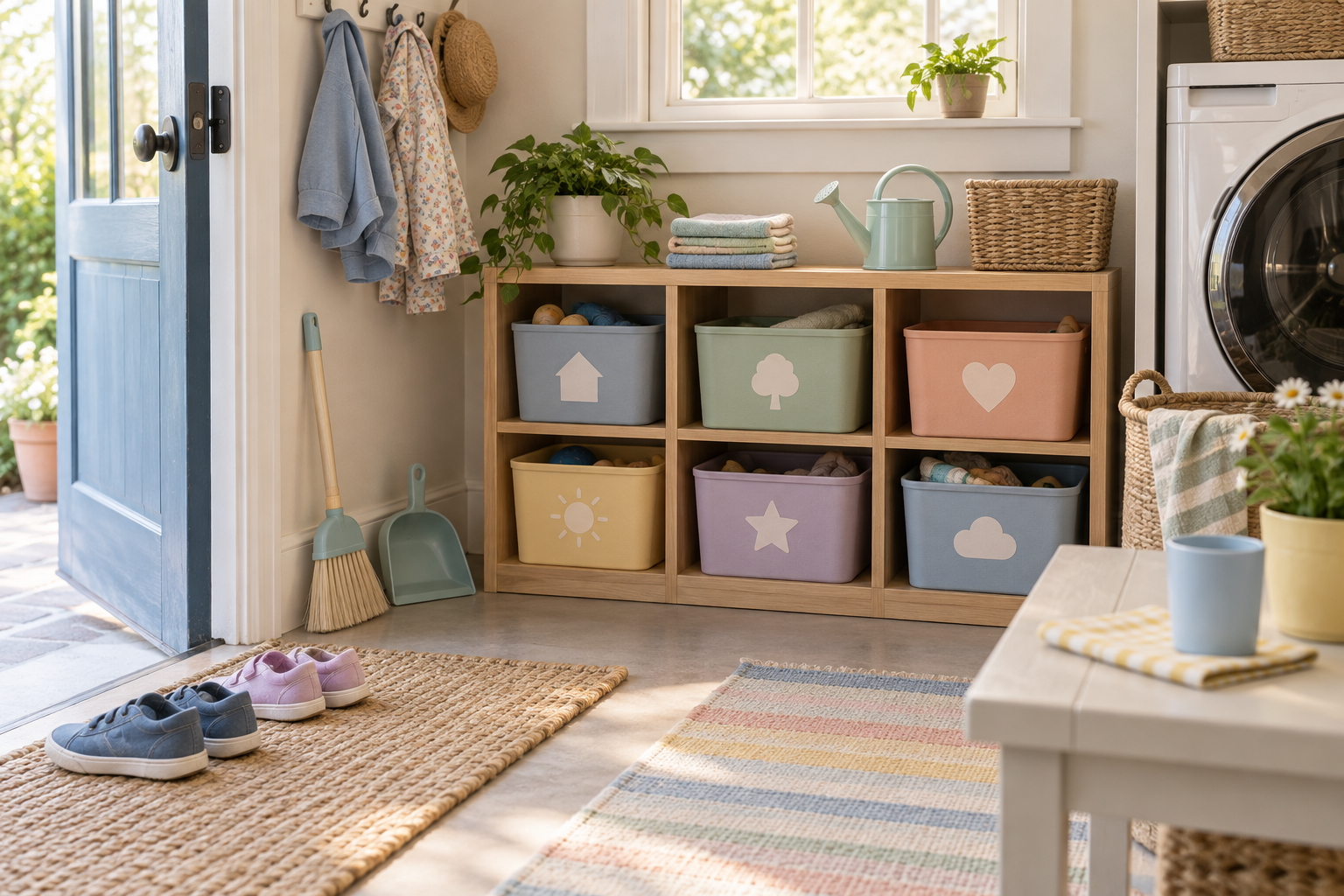
What Chores Can a 4-Year-Old
Do?
Many 4-year-olds can manage one familiar job or a short two- or
three-step routine. They still need clear instructions, demonstrations,
reminders, and help with anything heavy, hot, sharp, breakable,
chemical, or otherwise unsafe.
Here are 25 practical chores to try.
Bedroom and Playroom Chores
-
Put toys into labeled bins. Ask your child to
sort one or two categories, such as blocks in one bin and stuffed
animals in another. Picture labels can make the system easier to
follow. -
Return books to a low shelf. A 4-year-old can
gather books from around the room and place them upright or in a
designated basket. -
Put dirty clothes in the hamper. Make this part
of the getting-dressed or bedtime routine so the task has a predictable
cue. -
Straighten the bed. Your child can pull up a
blanket, place the pillow near the top, and arrange a favorite stuffed
animal. A perfectly made bed is not the goal. -
Choose and set out tomorrow’s clothes. Offer two
weather-appropriate outfits, then let your child place the selected
clothes in one spot. -
Put shoes and a jacket away. Use low hooks, a
mat, or an open basket that your child can reach without
climbing.
Laundry Chores
-
Match clean socks. Start with a small pile and
ask your child to find pairs by color, size, or pattern. -
Fold washcloths or small towels. Demonstrate how
to line up the corners and fold the item in half. Uneven folds still
count. -
Sort laundry by family member. Place a few
clean, familiar items on the floor and let your child make a pile for
each person. -
Put away simple clothing. A 4-year-old may be
able to place socks, underwear, or pajamas in an accessible drawer or
basket. -
Carry a small laundry stack. Give your child a
lightweight stack that does not block their view while walking.
Kitchen and Mealtime Chores
-
Place napkins and unbreakable cups on the table.
Give your child a simple count—one for each person—and keep glass,
knives, and hot food out of reach. -
Clear their own unbreakable dish. Show your
child exactly where to place it after eating. An adult should handle
sharp utensils and anything heavy or breakable. -
Wipe their place at the table. A damp cloth and
a small, clearly defined area make this job manageable. -
Help prepare a simple snack. With close
supervision, a child can rinse fruit, tear lettuce, spread a soft
topping with a child-safe utensil, or place ingredients in a
bowl. -
Put lightweight groceries away. Let your child
carry cereal boxes, paper products, or produce to a low shelf while you
handle cans, glass, and refrigerated items. -
Refill napkins in a holder. This is a small job
a child can learn to notice and complete with little mess.
Cleaning and Organizing
Chores
-
Dust a safe, low surface. Use a dry microfiber
cloth and clear away breakable objects before your child
begins. -
Sweep crumbs with a child-size broom. Ask your
child to move crumbs toward one area; an adult can finish with the
dustpan if needed. -
Wipe a low cabinet or baseboard. Use only water
on a cloth unless an adult is controlling and supervising any cleaning
product. -
Sort art supplies. Crayons, paper, stickers, and
washable markers can return to separate containers after a project. Keep
small or unsafe supplies out of reach. -
Collect safe items from one room. Your child can
gather books, stuffed animals, or clothing that belong elsewhere and
place them in a basket for you to put away together.
Family and Outdoor Chores
-
Bring in the mail with an adult. If the route is
away from traffic and otherwise safe, your child can carry lightweight
mail back to the house while you stay beside them. -
Help feed a pet. Pre-measure the food and
supervise closely. Adults should handle medications, raw pet food,
litter boxes, aquariums, and animals that guard food or eat
unpredictably. -
Water a plant. Fill a small watering can with
the right amount so your child can complete the job without overwatering
or carrying a heavy container.
How
Are Chores for 4-Year-Olds Different From Chores for 3-Year-Olds?
The difference is usually not the type of chore but the amount of the
job a child can remember and complete. A 3-year-old might put blocks in
one bin with a parent beside them. A 4-year-old may be able to put
blocks in one bin, books on a shelf, and then return the empty
basket.
That does not mean every 4-year-old should work independently. Some
children are ready for a short sequence, while others do best with one
direction at a time. If your child is just beginning, the simpler ideas
in our guide to chores for
3-year-olds are an equally good place to start.
How Many Chores Should
a 4-Year-Old Have?
Start with two or three regular jobs rather than assigning a long
list. One morning task, one after-meal task, and one evening task can
provide plenty of practice.
For example, your child might put pajamas away in the morning, carry
their cup to the counter after dinner, and place toys in bins before
bed. Once those jobs become familiar, replace or add one responsibility
at a time.
Daily consistency matters more than volume. A child who remembers two
small jobs is building a stronger habit than a child who faces a
different ten-item checklist every day.
How to Teach a
4-Year-Old to Do Chores
Describe the finished result
“Put the crayons in this box” is clearer than “Clean up.” Point to
the container, name the items, and show your child what “done” looks
like.
Teach the steps in order
Use simple sequence words: “First put the toys in the bin, then place
the books on the shelf, and finally bring me the empty basket.” If three
steps are too much, return to one direction at a time.
Work together before
stepping back
Demonstrate the job, complete it side by side, and gradually let your
child handle more of it. Independence grows through repetition, not
through being left alone with an unfamiliar task.
Give two acceptable choices
Ask, “Would you like to match socks or fold washcloths?” Limited choices let a preschooler have some control while the parent still sets the expectation. The CDC’s positive parenting guidance for preschoolers also recommends offering a limited number of simple choices.
Connect chores to routines
The same task is easier to remember when it follows the same event.
Clear the cup after breakfast, put shoes away when entering the house,
or tidy toys before the bedtime story.
If different schedules make routines hard to track, use the free Family
Schedule Planner to keep recurring family responsibilities visible
in one place.
Praise specific effort
Instead of saying only “Good job,” name what your child did: “You
matched every sock,” or “You remembered to put your cup on the counter.”
Specific feedback helps children understand the behavior they can repeat. The American Academy of Child and Adolescent Psychiatry similarly recommends age-appropriate tasks, clear expectations, routines, praise, and encouragement.
Should a 4-Year-Old Use a
Chore Chart?
A simple visual chore chart can help a 4-year-old remember a few
recurring jobs. Use short labels, pictures, or icons, and keep the chart
where the routine happens. A long chart filled with unfamiliar tasks is
more likely to overwhelm than motivate.
The chart can show the order of the day: one job in the morning, one
after a meal, and one before bed. Checking a box or adding a sticker
gives your child a clear way to see progress.
Use the free Kid Chore
Chart Generator to choose manageable tasks, personalize the chart,
and print a version that fits your family’s routine.
Do 4-Year-Olds Need
Rewards for Chores?
Four-year-olds do not need to be paid for every household job. Many
respond well to attention, specific praise, stickers, choosing a cleanup
song, or enjoying the next part of the routine after the task is
finished.
Families take different approaches to allowances and rewards.
Whatever you choose, keep the connection simple and predictable. Avoid
making basic participation depend on a new negotiation each time.
Chore Safety for
Preschoolers
Supervise chores and match every task to your individual child.
Four-year-olds should not handle household cleaners, knives, glass, hot
appliances, raw meat, heavy objects, medications, pet waste, or jobs
that require climbing. Keep laundry detergent packets, button batteries,
choking hazards, cords, and other dangerous items secured and out of
reach.
Be especially careful around water, streets, pets, and food
preparation. “Helping” with a task does not mean a preschooler is ready
to do it alone. If a job regularly causes frustration or unsafe
behavior, simplify it or choose another.
A Simple Three-Chore
Starter Routine
Try this routine for one or two weeks:
- Morning: Put pajamas in their designated spot.
- After dinner: Carry an unbreakable cup to the
counter and wipe their place. - Before bed: Put toys into two labeled bins.
When those steps feel familiar, swap in another responsibility rather
than adding several new jobs at once. A routine that is calm and
repeatable will build more independence than one that expects
perfection.
Ready for the next stage? Explore these chores for 5-year-olds for simple responsibilities that build on preschool routines.
Frequently Asked Questions
Is age 4 too young for
chores?
No. Many 4-year-olds can help with simple household tasks under adult
supervision. The CDC specifically encourages letting children this age
help with chores as one way to build independence.
What is the easiest
chore for a 4-year-old?
Putting dirty clothes in a hamper, placing napkins on the table,
returning shoes to a basket, and putting toys into labeled bins are easy
places to begin.
Can a 4-year-old clean their
room?
A general instruction such as “clean your room” is usually too broad.
Break it into small jobs: put blocks in the bin, return books to the
shelf, and place clothing in the hamper.
What if my
4-year-old refuses to do chores?
Make the job smaller, offer two acceptable choices, complete the
first step together, and connect the task to a consistent routine. Keep
your response calm and avoid turning a two-minute job into a long
conflict.
How long should chores
take at this age?
Most preschool chores should take only a few minutes. Short, familiar
tasks are easier to complete consistently and leave room for the play
and connection young children need.